
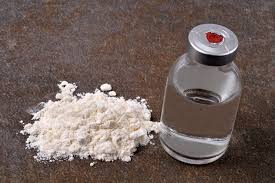
Ghb Powder To Water Ratio, The term “GHB powder to water ratio” refers to the specific proportion used to dissolve gamma-hydroxybutyrate (GHB) in water for various laboratory or research purposes. GHB, a central nervous system depressant, has been studied for its sedative effects and its use in medical settings (e.g., for narcolepsy or alcohol dependence in some countries). However, it’s also known for its misuse in non-medical contexts, making knowledge about its handling important strictly for legal and scientific research environments.
Qu'est-ce que le GHB ?
GHB (gamma-hydroxybutyric acid) is a naturally occurring substance in the human body, functioning as a neurotransmitter and a precursor to GABA (gamma-aminobutyric acid). In its salt form, GHB is often found as a white powder ou crystalline substance, which is water-soluble.
Ideal GHB Powder to Water Ratio
Le standard GHB powder to water ratio depends largely on the desired concentration for accurate measurement in lab settings. A commonly referenced ratio is:
-
1 gram of GHB powder per 1 milliliter (mL) of water, yielding a 1g/mL concentration.
This ratio creates a potent solution, so alternative lower concentrations are often used for safer, controlled handling, such as:
-
1 gram of GHB per 5 mL of water – producing a more dilute solution, which may be easier to dose and measure accurately in a controlled setting.
Factors Affecting the Ratio
Several variables can influence the appropriate ghb powder to water ratio, including:
-
Purity of GHB: Lab-grade GHB should be of known and verified purity. Impure samples require recalculations to achieve the desired concentration.
-
Purpose of Use: For analytical or experimental purposes, exact concentrations are critical for reproducibility and data integrity.
-
Stability: GHB solutions should be stored in airtight containers, preferably refrigerated, to avoid degradation.
Safety and Legal Considerations
It is essential to highlight that GHB is a controlled substance in many countries, including the U.S., UK, and EU nations. Unauthorized possession, synthesis, or distribution is illegal and can have severe legal consequences.
Additionally, misuse of GHB can lead to serious health risks, such as unconsciousness, respiratory depression, and in some cases, death. Therefore, handling any GHB-related material should be left to licensed professionals within regulated settings.
Conclusion
Understanding the proper ghb powder to water ratio is crucial for researchers working within lawful parameters. The standard ratio may vary based on concentration needs, but precision and safety should always remain the top priority. Due to the legal and health risks associated with GHB, its handling must always comply with national regulations and ethical research standards.
Vous aimerez peut-être aussi :
 French
  English
  German
  Dutch
Dutch  Italian
  Swedish
  Portuguese
  Spanish